When “Good Enough” Isn’t Even Close
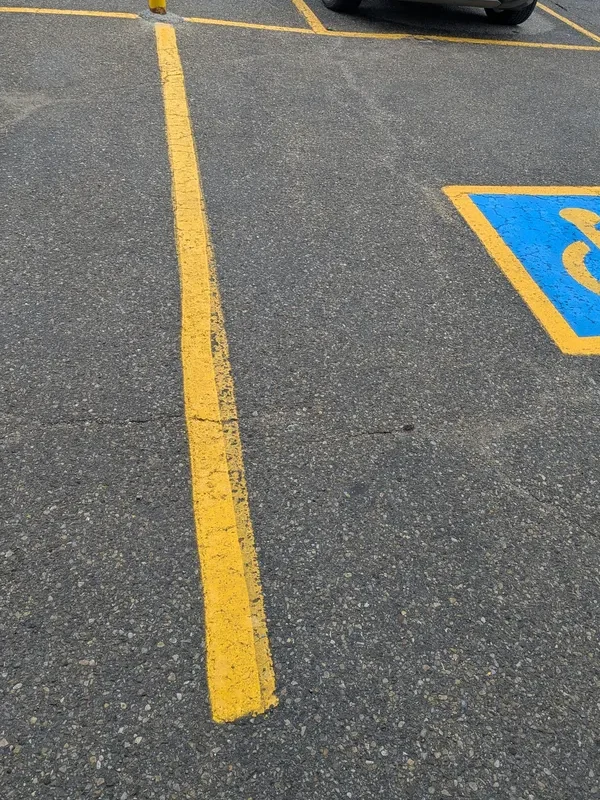
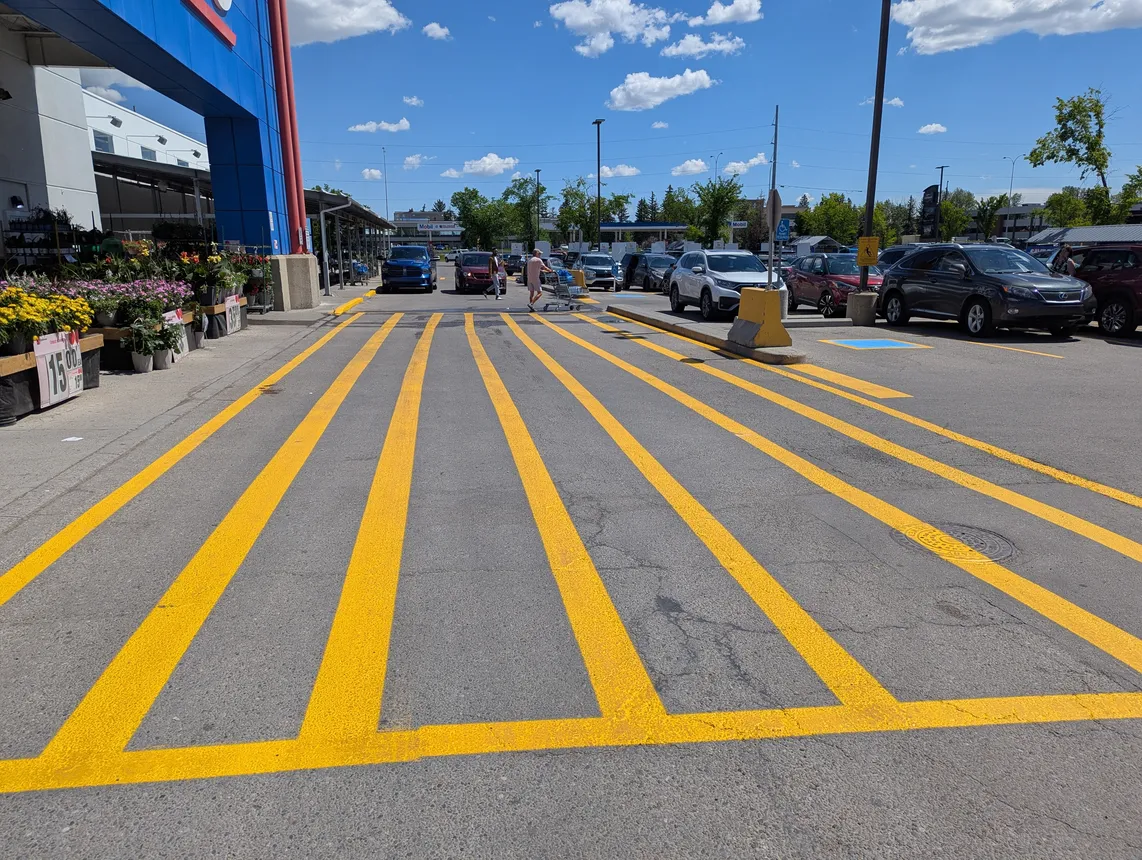
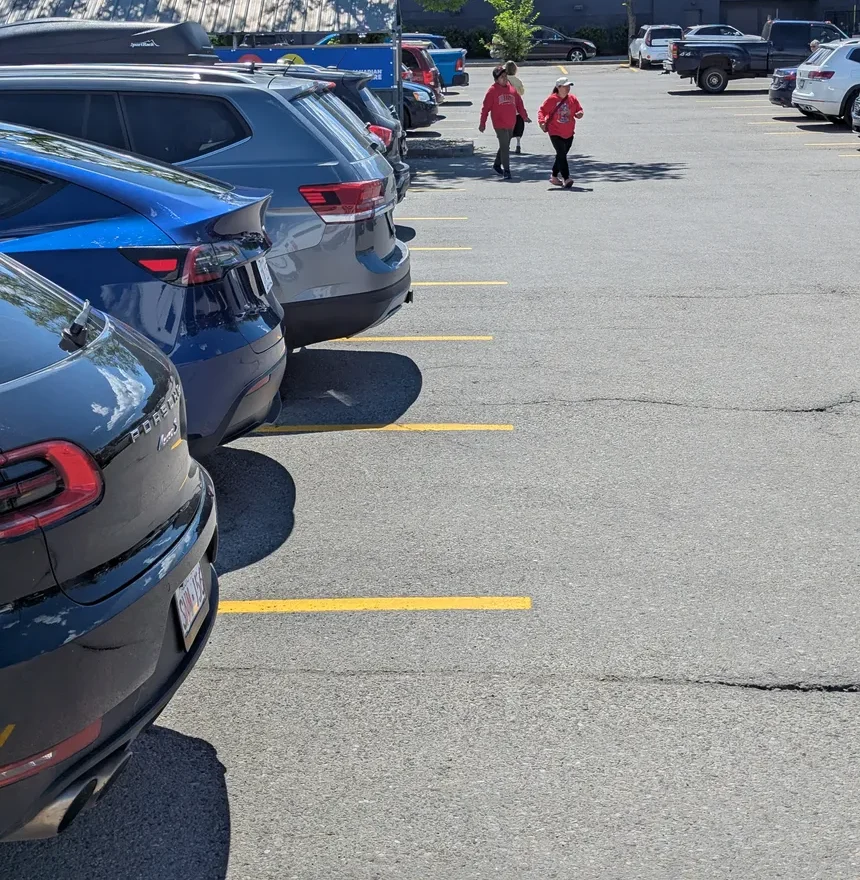
Take a look around any busy parking lot in the city and you’ll start noticing it everywhere—line striping that’s simply done without care.
Lines painted on top of old lines. Crooked edges that wander instead of staying straight. Parking stalls with uneven lengths that don’t line up with anything.
This isn’t wear and tear. This is poor workmanship.
In the photos above, you can clearly see overlapping lines where no effort was made to properly remove or cover old markings. That creates confusion for drivers and makes the whole layout look sloppy. You can see stalls that don’t match in length, which is a basic layout failure. It shows no measuring, no checking—just rushing through the job.
And then there’s the pedestrian crossing. The lines are inconsistent in thickness, too wide in some areas, too thin in others, and completely uneven. Instead of a clear, highly visible crossing, it ends up looking like random yellow bars on asphalt. That’s not just ugly—it defeats the purpose.
The reality is, Canada doesn’t have strict, detailed regulations for every aspect of parking lot striping. But there are well-known best practices in the industry—standards for spacing, alignment, line thickness, and layout. The problem is, too many crews ignore them. Not because they don’t know better—but because they don’t care enough to take the extra time to do it right. And it shows.